 Book now
 Visiting the Škocjan Caves in Slovenia
What to see, how the guided tour works, what to wear, how long to allow, and how to combine the caves with the Karst.
The Škocjan Caves reward a little preparation. Here's what you'll see, how the guided tour works, what to bring, and how the caves fit into a day in Slovenia's Karst.
A cave like no other
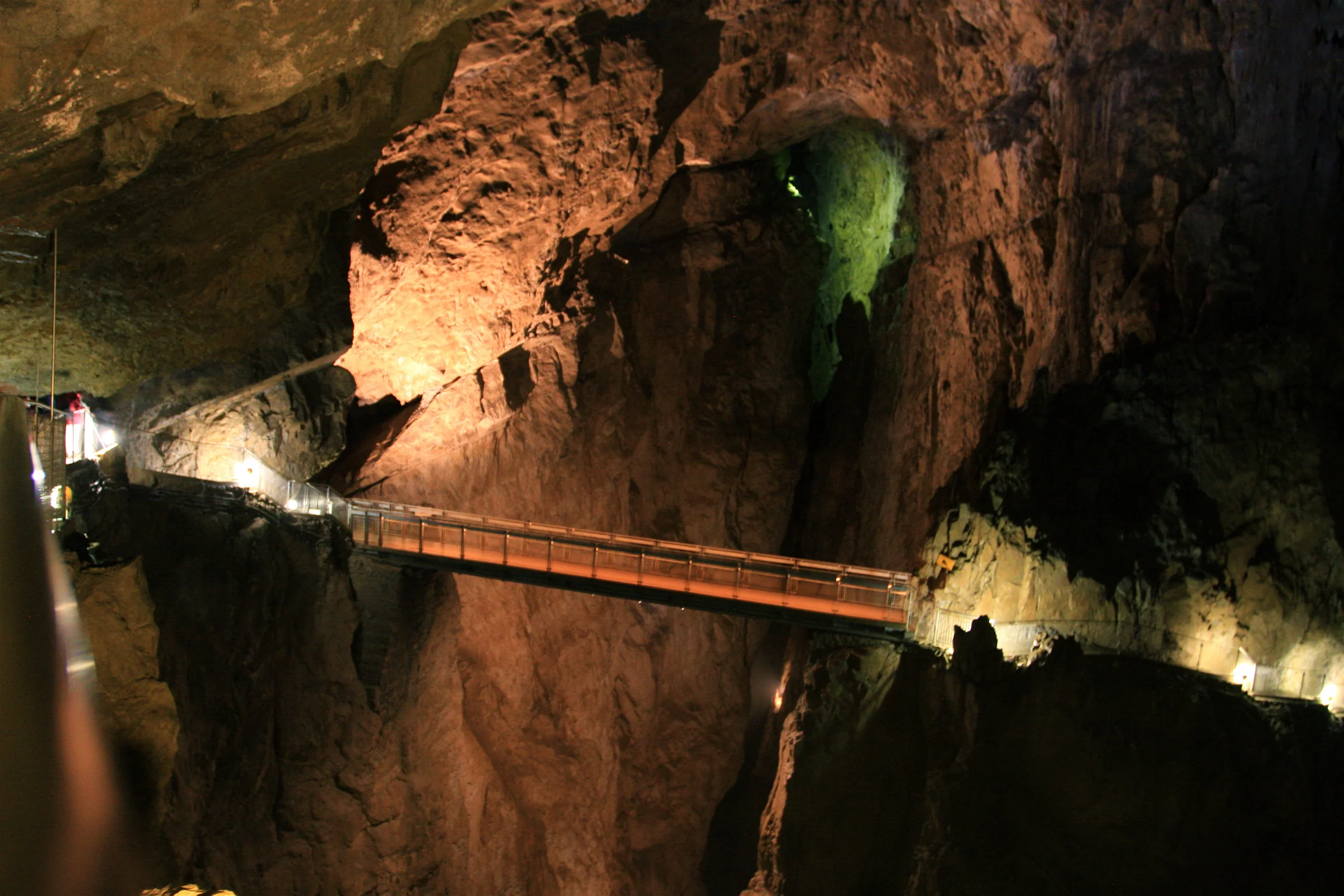
Most show caves are about delicate formations; Škocjan is about scale and sound. The Reka river has carved one of the largest underground canyons in the world here, and the guided walk across the Cerkvenik bridge high above the water is unlike any other cave experience in Europe.
That drama, and the UNESCO World Heritage status that recognises it, is why Škocjan is worth planning your Slovenia trip around.
What you'll see on the tour
The tour descends first into the Silent Cave (Tiha jama), a dry passage of stalactites and flowstone crowned by the giant stalagmite known as the Giant, then into the Murmuring Cave (Šumeča jama), where the river thunders through the 146-metre-deep canyon and the footbridge crosses high above.
You emerge through the Velika dolina, a vast collapse valley open to the sky — a spectacular finish.
How the visit flows
Arrive at the reception centre about 30 minutes before your departure, join your guided group, and set off on foot. The walk lasts around two hours over three kilometres, with several hundred steps. There's time to take in the chambers, though the group keeps moving and photography inside is not allowed.
Afterwards, explore the collapse dolines, the natural bridge and the reception centre's exhibitions at your own pace.
What to wear and expect
It's about 12 °C inside year-round, so bring a warm layer whatever the weather; and wear sturdy, non-slip shoes for the wet, stepped path. Bring water. The tour is moderately demanding and not suitable for wheelchairs or serious mobility limits — ask about the accessible route if needed.
Allow half a day for the caves and dolines together; a full day if you add the Karst or Postojna.
Škocjan and Postojna together
Slovenia's two great caves are 40 minutes apart and complement each other: Postojna's cave train and delicate formations, Škocjan's wild underground canyon. Many visitors do both in a day, often adding the cliff-set Predjama Castle near Postojna.
If you have to choose, Škocjan is the one for drama and scale; Postojna for ease and family-friendliness.
The Karst around the caves
The Karst plateau is worth a day in itself: the Lipica stud farm and its Lipizzaner horses, the red Teran wine and pršut ham of the Karst cellars, and villages like Štanjel. It's an easy, rewarding region to linger in after the caves.
Trieste, just over the Italian border, and the Slovenian coast are also within an hour.
Frequently asked
How long do you need at the Škocjan Caves?
About two hours for the guided tour, half a day with the dolines, a full day if you add the Karst or Postojna.
Is the tour difficult?
Moderately — two hours, three kilometres, several hundred steps, some wet. Sturdy non-slip shoes are essential.
Should I do Škocjan or Postojna?
Many do both. Škocjan is wilder and about the underground canyon; Postojna has a cave train and delicate formations and is more family-friendly.
What's the best part?
Crossing the Cerkvenik bridge over the roaring Reka river in the 146-metre-deep canyon — an unforgettable sight.
Is it cold inside?
About 12 °C year-round — bring a warm layer even in summer.